
AI and RPA Work Best When Automation Is Governed After Go-Live

AI and RPA Work Best When Automation Is Governed After Go-Live

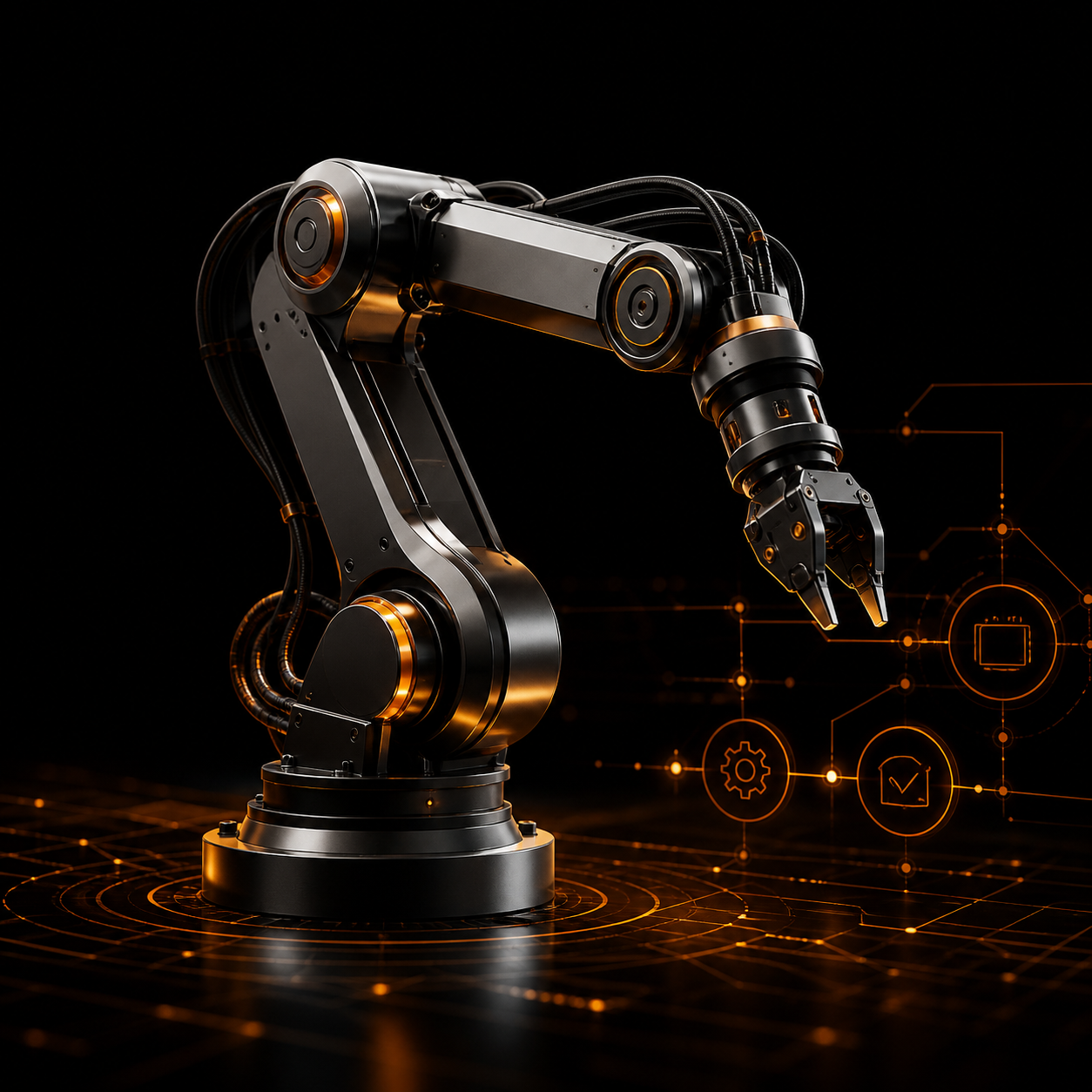
AI and RPA can extend automation beyond fixed, rules-based tasks by allowing systems to interpret documents, messages, classifications, or other variable inputs before deterministic actions occur. For COOs, CFOs, CIOs, and automation leaders, the benefit is broader workflow coverage, but the risk also changes because probabilistic AI output can now influence software robots that execute real transactions.

The strongest operating model separates interpretation from execution. AI can classify, extract, summarize, or recommend; RPA can perform stable system steps; humans can review uncertain or consequential exceptions. That boundary must remain governed after go-live because data, interfaces, rules, and model behavior all change in production.

AI Expands What RPA Can See, but Also What Can Go Wrong

Traditional RPA works best when inputs and rules are predictable. AI can help when an invoice arrives in a variable format, an email must be categorized, a claim document needs interpretation, a vendor onboarding package contains free text, or a compliance report requires information extracted from multiple documents. These are useful extensions because AI can turn unstructured inputs into structured signals.

However, the software robot may act on those signals without understanding uncertainty. If a classification is wrong, the RPA layer may route the case incorrectly. If an extracted amount is wrong, the bot may populate the wrong value. If a summary omits a restriction, a downstream step may proceed when it should stop. The execution layer can magnify interpretation errors.

Do Not Hide Probabilistic Decisions Inside Deterministic Bots

A common design weakness is to make the AI step invisible inside a bot workflow. Operations teams then see a failed transaction but cannot easily tell whether the cause was model uncertainty, a business exception, an application change, or an RPA defect. That makes support slower and governance weaker.

The better pattern is to expose the AI decision, confidence, source evidence, and exception reason as part of the workflow state. Low-confidence or high-risk cases should move to human review before the robot continues. Deterministic steps should remain separately observable so teams can distinguish interpretation failures from automation failures.

Design the Workflow Around a Decision-Execution Boundary

Leaders can use four questions to define that boundary:

  • What is interpreted? Identify the unstructured or ambiguous input that requires AI.
  • What is deterministic? Define the stable rules and system actions that RPA can execute reliably.
  • What requires review? Set confidence, value, risk, or policy thresholds that trigger human approval.
  • What stops safely? Specify fallback behavior when the AI, bot, source system, or downstream integration fails.

This design keeps AI uncertainty from disappearing inside a robot that appears deterministic to the business.

Implementation Should Treat Exceptions as First-Class Work

Exception design should distinguish business exceptions from technical failures. A missing purchase order, ambiguous claim code, or incomplete onboarding document is a business condition. A broken selector, API timeout, expired credential, or changed interface is a technical condition. They need different owners, service targets, and remediation paths.

Testing should include low-quality documents, new formats, unexpected emails, duplicate records, system downtime, access changes, and model outputs close to confidence thresholds. Human reviewers need enough source evidence to resolve cases without rebuilding context manually. Audit trails should connect the original input, AI output, reviewer action, RPA step, and final transaction where appropriate.

Governance After Go-Live Determines Automation Reliability

Relevant measures include AI low-confidence rate, human review rate, bot failure rate, business-exception volume, manual rework, requeue frequency, unresolved exception age, integration failure rate, and the number of cases where a reviewer overrides the AI recommendation. Monitoring should also track changes in document mix, application releases, business rules, credentials, and source quality.

Production ownership should span automation operations, business process owners, system owners, and AI or data owners. A reliable program needs incident triage, root-cause analysis, release testing, access review, threshold review, and continuous improvement after go-live. Automation is not finished when the combined workflow first completes successfully.

How Neotechie Can Help

For automation and operations leaders combining AI and RPA in business-critical processes, Neotechie can help map the workflow, separate interpretation from deterministic execution, define review thresholds, design exceptions, assess integrations, and establish the governance needed after launch.

Neotechie can support process discovery, AI-assisted extraction or classification, RPA integration, human review, testing, role-based access, monitoring, exception handling, bot operations, and post-go-live improvement so intelligent automation remains controlled in production. Neotechie supports data engineering, analytics modernization, BI, applied AI, AI copilots, text classification, extraction, summarization, human-in-the-loop workflows, role-based access, audit trails, and AI output monitoring. Explore Neotechie’s Data and AI services.

Conclusion

AI and RPA work best together when AI interpretation is visible, RPA execution remains deterministic, and human review protects the cases where uncertainty matters. Leaders should invest as much in post-go-live governance and exception operations as in the initial automation build.

Neotechie can help organizations design and run intelligent automation with clear boundaries, monitoring, production support, and continuous improvement across the full workflow.

Frequently Asked Questions

Q. What role should AI play in an RPA workflow?

AI is most useful for variable inputs such as classification, extraction, summarization, or recommendation before deterministic steps occur. RPA can then execute stable system actions when the AI output and business rules meet defined conditions.

Q. How should AI and RPA exceptions be separated?

Teams should distinguish model uncertainty and business exceptions from technical bot or integration failures because each type needs different evidence and ownership. Clear categories make triage faster and help leaders see whether the issue is interpretation, process design, or automation reliability.

Q. Why is governance still needed after an intelligent automation goes live?

Document formats, model behavior, business rules, interfaces, credentials, and user practices change over time. Ongoing monitoring, access review, threshold review, support, and root-cause analysis keep the automation aligned with current operations.

Categories:

Leave a Reply

Your email address will not be published. Required fields are marked *